Our second week in Las Tolas is coming to an end. Our group has now been scattered among our multiple host families. We’ve changed our shared rooms in the school for cozy beds in different houses in the town, and our late night card games for reading time with our host siblings. Nevertheless the week has still been packed with games, field trips, and lots of work.
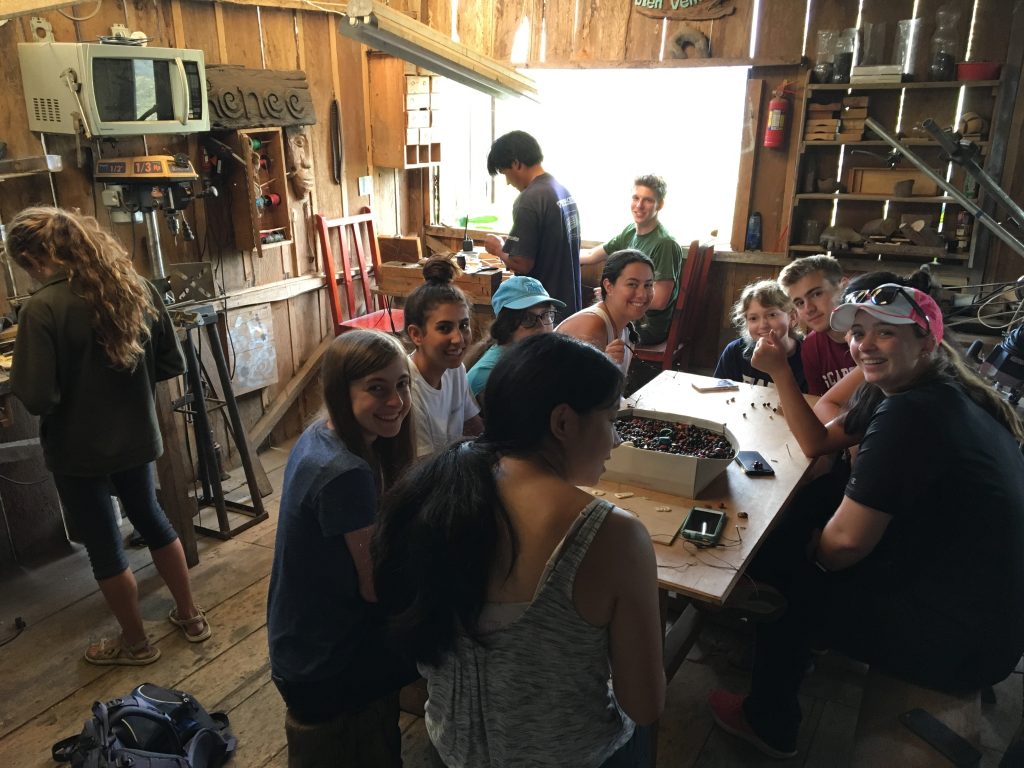
Starting the crafting workshop.
We started our first homestay day on Tuesday with a handcrafts workshop where Renee taught the group how to make bracelets with seeds and string. He also told us his story and how he changed from being a woodcutter, to an artisan, and finally to a mason (although he hasn’t stopped crafting). It was inspiring to see Renee and his community trying hard to expand conservation efforts in the area.
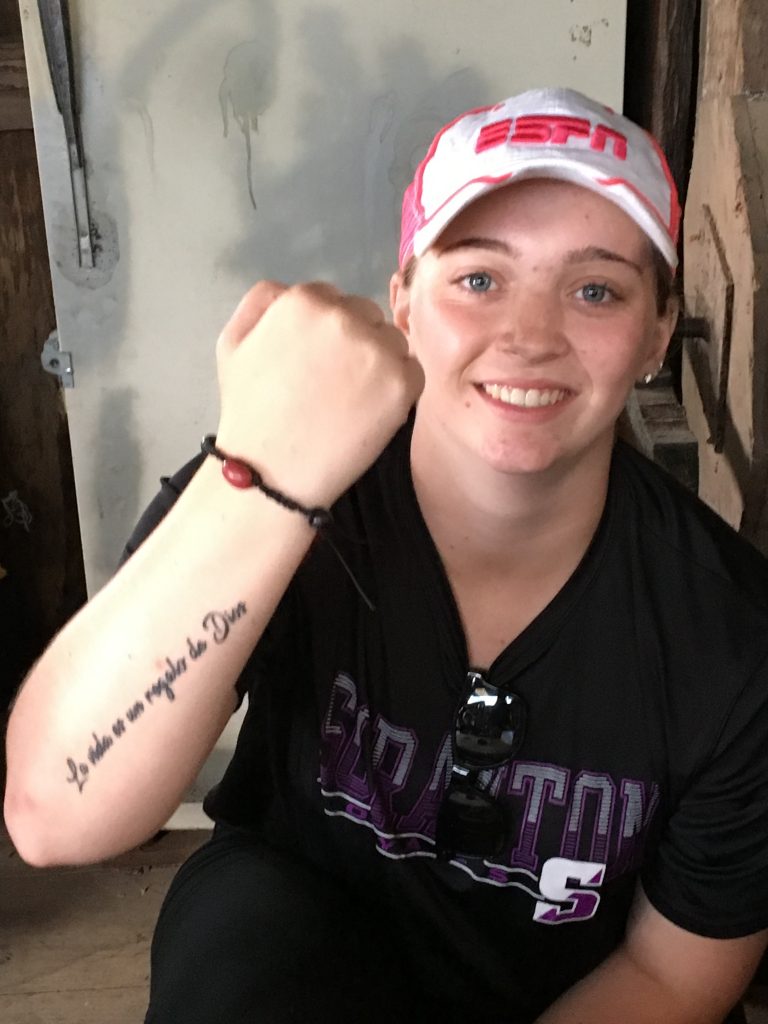
Posing with newly created bracelets.
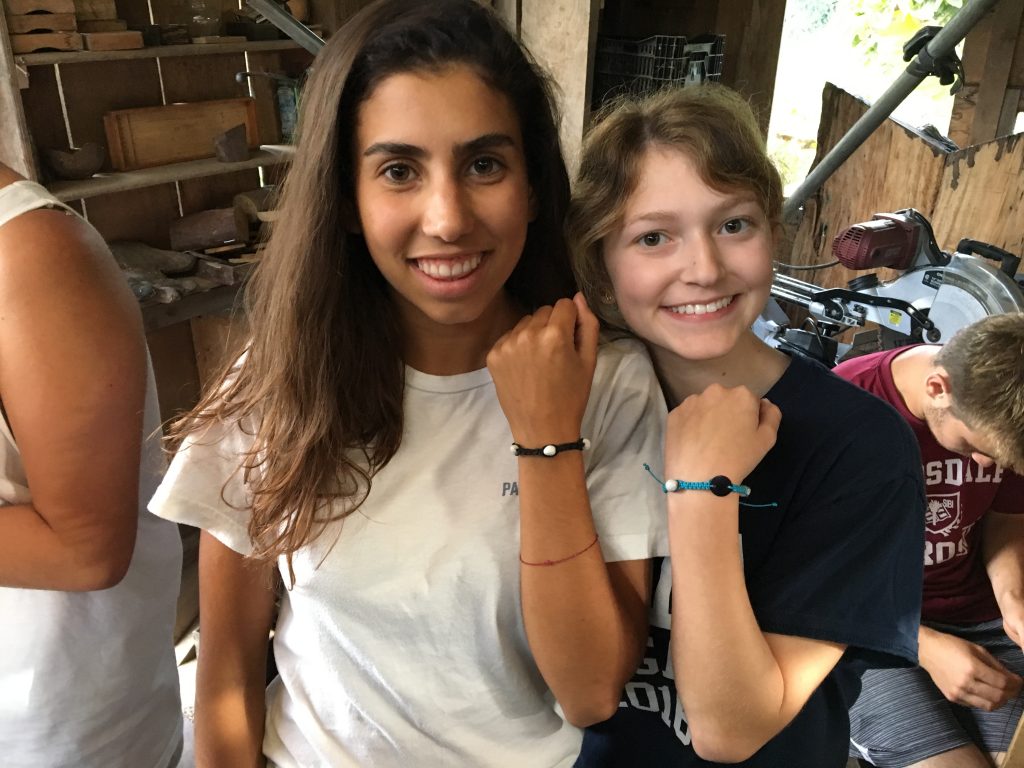
Posing with newly created bracelets.
The following day Sebastián took our group to visit the coffee farm where he works, so our group headed out for a quick walk and visited the finca. We began by picking coffee beans, then Germánico (the owner) showed us the process of turning those beans into coffee grains we could drink. First, we had to de-pulp the coffee beans; then they needed to be dried in the sun, a process that usually takes around three weeks; finally, they needed to be peeled and then toasted so they could be ready for grinding. After grinding, they could be ready for drinking. Germánico explained that the quality of the coffee grown in the area is due to the altitude. Since coffee is a tropical plant, it can only grow on tropical regions which are usually at sea level. This is why the taste of the coffee grown in the Andes is unique in the world, and even varies between regions depending on the altitude and distance from the equator at which the coffee is grown.
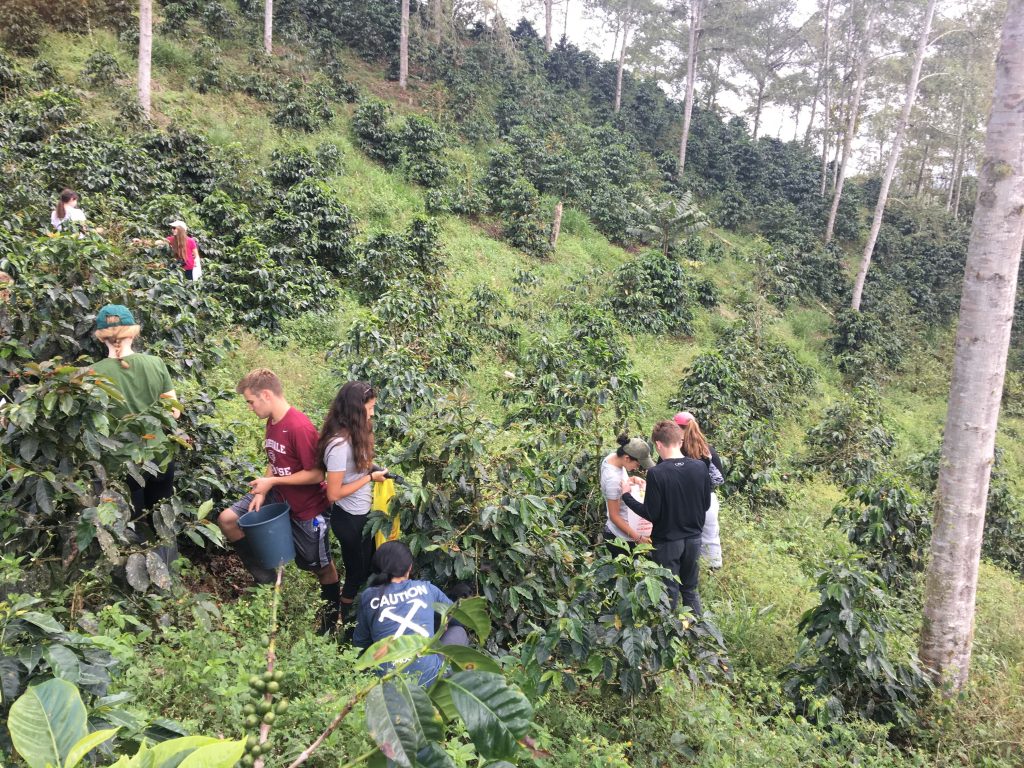
Picking coffee.
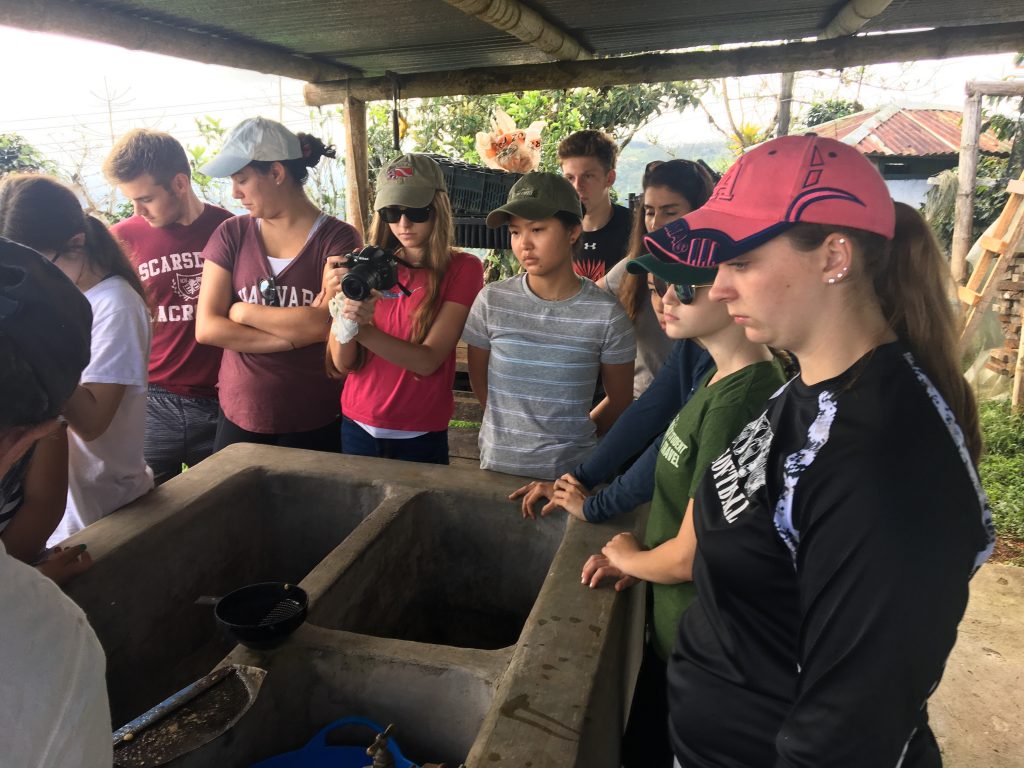
Germánico explains to the group the de-pulping and washing process.
We finished our evening with some fun games among the group, and singing the famous hit “Despacito” by Luis Fonsi.
We owe our Friday plans to doña Oliva, who arranged for us to visit a panela, or brown sugar, factory and a cheese factory in the same day. I felt that it was a very enriching experience for our students who got to see firsthand the industries that exist in the area that surrounds our community. At this point, we have all milked cows, fed chickens, picked coffee, and seen sugarcane become the brown sugar we put in our drinks every day.
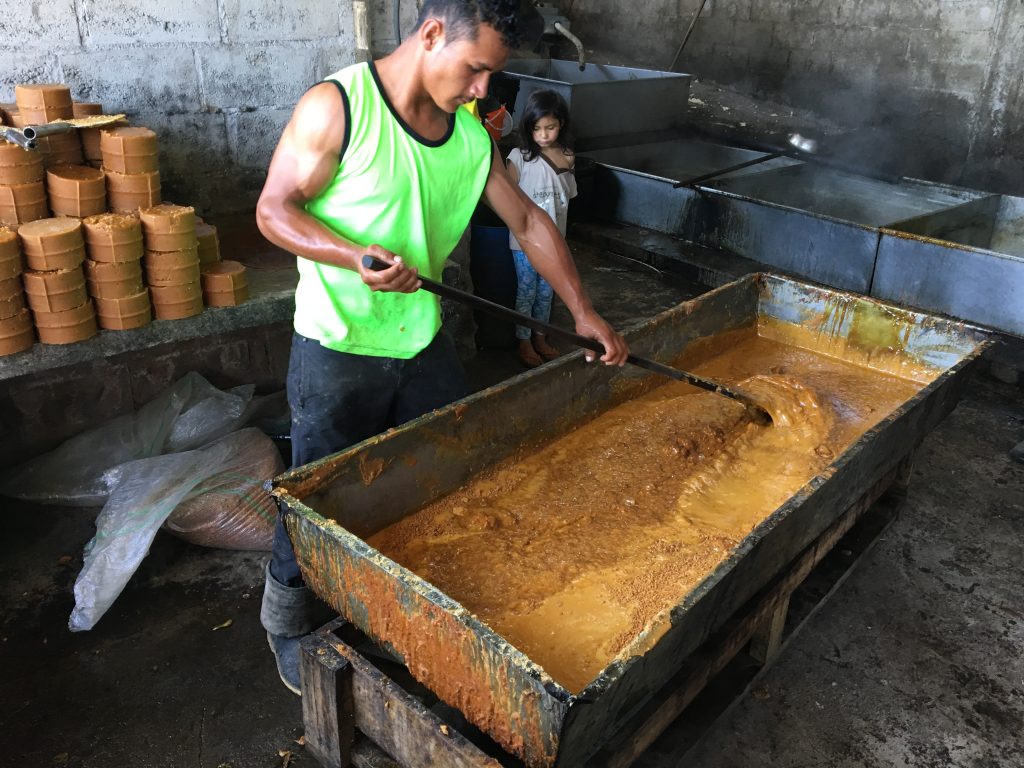
Stirring freshly boiled brown sugar.